The age of the gathering is in for an irreversible change. Event planning has moved out of physical borders because virtual event attendance has grown to Online Event Management. The new paradigm presents opportunities in Kenya from the corporate boardrooms of Nairobi to its creative centers, enabling the talents here to go global.
It takes much more than just a webcam and a link to organize a great virtual gathering. It takes the right combination of technology, great content, and administration.
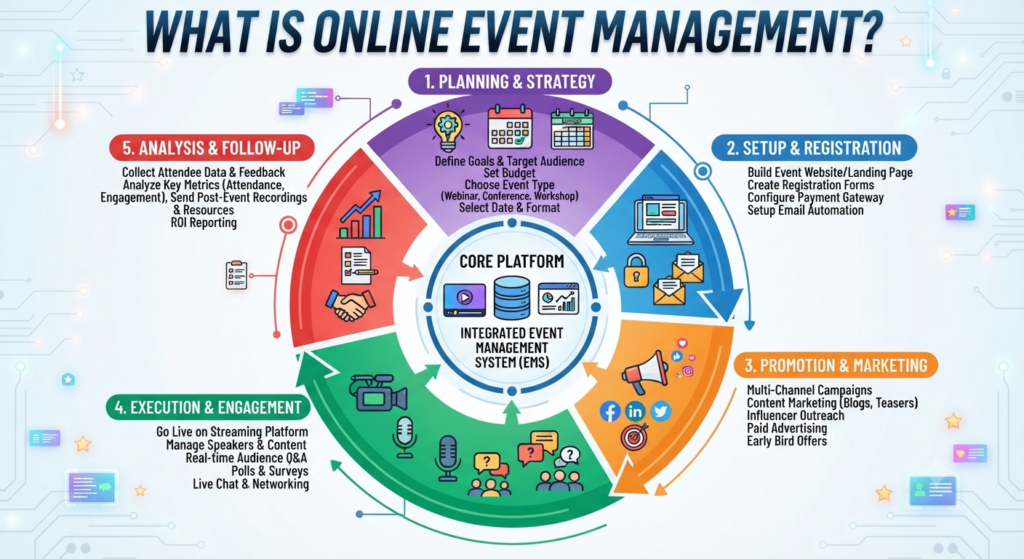
What is Online Event Management?
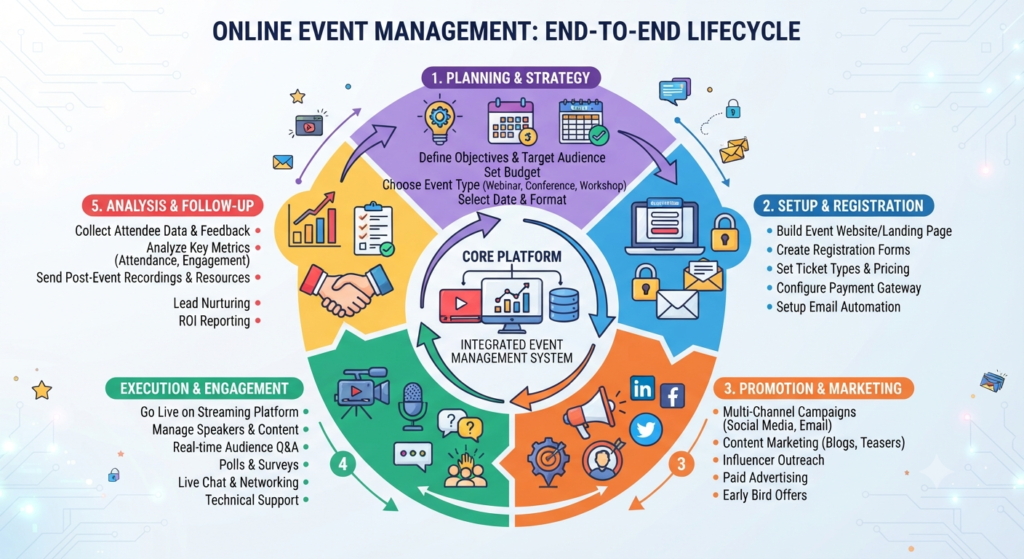
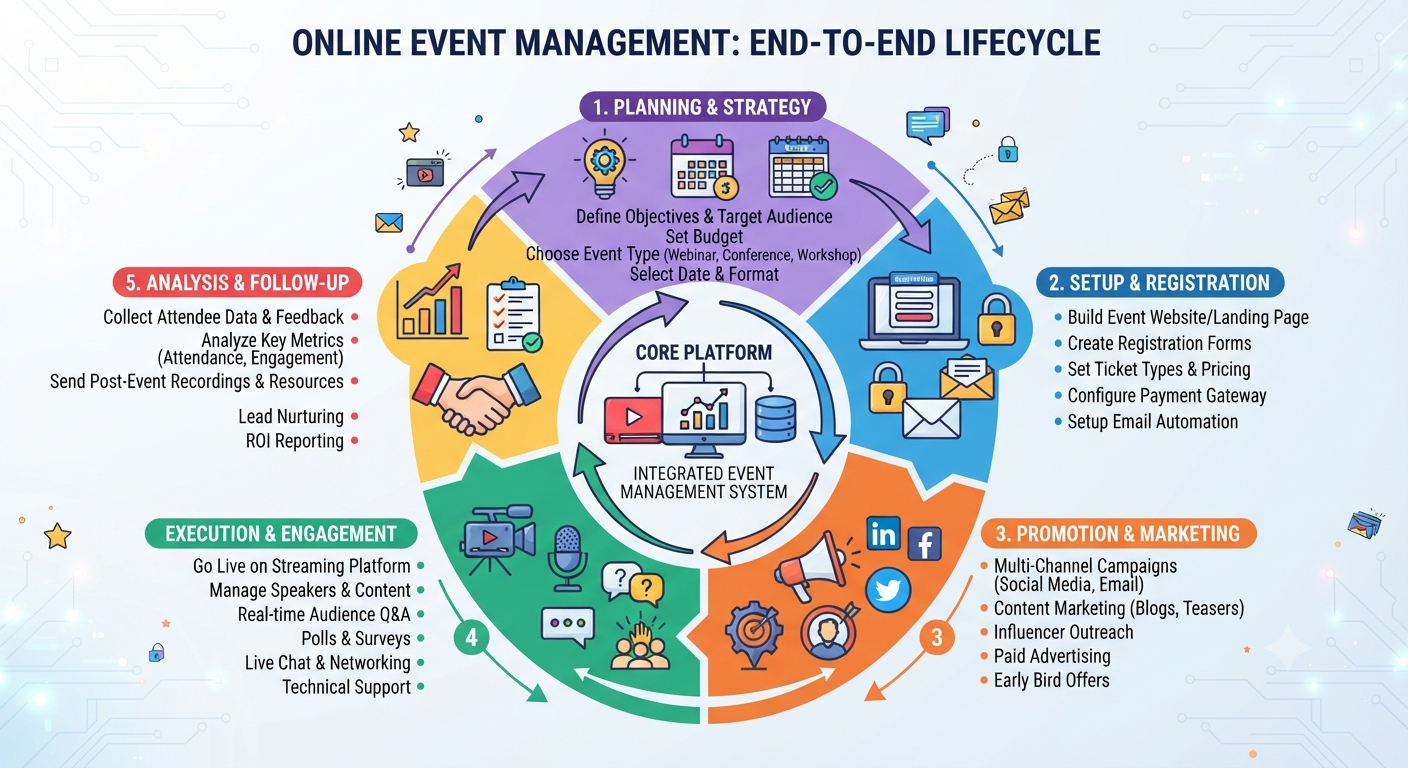
Online Event Management refers to the comprehensive planning and execution of events either entirely online or in hybrid form. As opposed to physical events, which emphasize on logistical elements such as caterers and venue security, online events emphasize more on the technology stack to ensure low latency, effective user interface, and global availability.
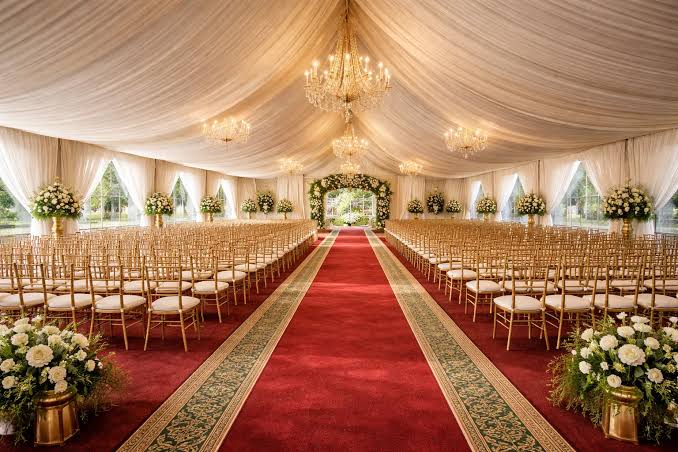
Hybrid Model is the way forward. This is where the event has a physical center based in Nairobi and is streamed globally.
The 4 Essential Pillars
For successful digital events, learn how to master these four factors:
- Right Platforms: Select platforms that align with the objective. Use Zoom or Teams for virtual webinars and Airmeet or Hopin for online expos. In the Kenyan scenario, focus on efficient bandwidth use and use platforms that have a low latency stream for mobile phone users.
- Smooth Registration Process: Make the registration process seamless to avoid any friction in the process. It involves integrating local payment methods such as M-Pesa and Airtel Money apart from using Visa as an international method of payment.
- Efficient Content Delivery: Sound is everything. Invest in microphones as well as lighting. In case you want professional level content, engage local production studios in Nairobi.
- Active Participation: Avoid digital boredom by engaging participants through live polls, upvoted question-and-answer sessions, and leaderboards.
The Ultimate Playbook: 5 Phases of Success
- T-Minus 4 Weeks (Strategy): Set your KPIs. With captivating as your objective, content is the primary driver. Ensure you recruit some of the best people or experts from channels such as Gigmint to entice the audience into watching your show.
- T-Minus 2 Weeks (Promotion): Conduct multi-channel marketing. Get your speakers branded graphic kits to capitalize on their individual connections.
- T-Minus 2 Days (Technical Dry Run): “Tech-check” never misses in your schedule. Always test every transition. Secret tip: It is wise to have backup plans in case of any power/internet failures using 4G/5G mobile hotspots and UPS systems.
- Live Day (Orchestration): Role allocation is critical. Have your technical director keep watch on your streams while a moderator serves as the “human pulse.”
- Post Event (Retention): Thank your participants within 48 hours via emails with on-demand links and survey forms.
Smart Monetization
Quit “hosting” and begin “profiting” through diversified streams of income:
- Tiered Ticketing: Provide Early Bird, General, and VIP Backstage tickets.
- Virtual Sponsorship: Provide digital booth, sponsored masterclass session, or video-overlay advertising.
- Revenue Diversification: Provide “Digital Only” tickets to those who cannot make it physically to the venue.
Measuring Success
The data available on digital platforms is in real time and is unmatched by any physical event. Monitor:
Turnout Ratio: Number of people who registered versus number who attended.
Average Viewing Time: To identify where engagement wanes.
Questions & Polls Answered: Quantity of interactions.
Harness these learnings to fine-tune your upcoming event. Make it a data-driven growth driver.
Frequently Asked Questions
- What is the best platform to host a webinar for a small group? Zoom and Google Meet work great for basic interactive webinars. If you need some additional functionality such as breakout rooms, custom branding, and analysis of participants, Airmeet or specialized webinar tools will provide a more sophisticated interface.
- How do I use M-Pesa for ticket purchases? Add a payment gateway such as DPO, Pesapal, or Flutterwave. These payment solutions are optimized for Kenyan mobile payments and help to minimize the cart abandonment rate when people pay with M-Pesa rather than cards.
- What kind of technology do I require for my pro-virtual event? It is essential to have a high-end USB condenser microphone for high audio quality. This should be complemented with either a ring light or a soft-box for lighting, avoiding any kind of shadowing. In addition to this, a wired ethernet connection will work best to maintain consistency in terms of bandwidth during live streaming.
- How can I avoid “Zoom fatigue”? An “80/20” approach can help in dealing with this phenomenon. 80 percent of the time should be devoted to interaction and 20 percent of the time towards presentation. Live polls, interactive Q&A sessions, and 5 minutes of movement breaks are some of the ways of maintaining a high level of energy among viewers. Switching of screen layouts or different speakers also does the trick.
- Is it expensive to conduct a hybrid event management? It is expensive but not as expensive as conducting only physical events. A lot of money is saved from travel and venue arrangements. The savings can be allocated elsewhere, thereby giving a better return on investment.
- What about if there is an internet problem during an event? I always make sure there is a secondary internet option. The default one is the high-speed 5G mobile hotspot connection. It should be complemented by a solid Uninterruptible Power Supply (UPS) for my PC and all the lighting equipment so as not to lose the stream due to even slight power fluctuations or outages.
- Can I offer sponsorships for the virtual event? Sure, they are incredibly useful and effective. Make sure to provide tiered packages of sponsorships, which will allow companies to advertise their brands on the event landing page, have virtual booths where they can communicate with participants using video chats, and air their ads during the transitions of the live broadcast.
- How should I determine the success of my virtual event? Forget just counting the number of people who attended the event. Use various platforms to calculate your “engagement score” based on average time of watching, number of concurrent viewers, and messages or questions asked by participants per each session.
- Which feature is essential in a virtual event? Good audio. Research has proven time and again that even poor video quality can be forgiven by participants, but poor audio quality will cause the viewers to leave instantly because it may not only be distorted or echo-y but also too soft. Professional sound is the key component of an authority brand on the web.
- Where can I look for talent for my virtual online event management? Getting professionals, whether it’s speakers, artists, hosts, has never been easier due to special directories. With Lumi Events platform, you can find a wide range of professional and pre-screened talent who are especially trained for virtual performances.
Revolutionize Your Upcoming Event?
The key to success is in how well you do what you need to do. You don’t need to do everything yourself when creating a virtual event.
Ready to put on a spectacular virtual event? Work with Lumi Events to source some of the best local talent around for your digital event.