Introduction
On average, a consumer is exposed to between 5,000 and 10,000 digital ads every day. In light of this high number of ads, a multitude of commercials vying for a consumer’s attention on a daily basis can lead to banner blindness, an increase in usage of ad blockers and ultimately digital fatigue..
Experiential Brand Activations — that’s what it’s called these days, as opposed to simply holding a corporate event or mail-ing out passive product samples for people to taste and touch at their leisure. Experience Branding refers to fully-immersive, dynamic experiential marketing campaigns, where brands attempt to forge meaningful connections with targeted prospects in deeply-remembered, multi-sensory physical interactions and experiences.
Modern consumers are far more aware of the brands they buy from than in the past, and in many cases they are more interested in the brand’s values and the brand experience than in purchasing a product. Experiential marketing is therefore designed to create memorable brand experiences and allow consumers to experience the brand’s values first-hand.
With the option of sharing these experiences with their friends and family via social media, brand experiences have the ability to generate fierce brand advocates in a short space of time. A pop-up shop, brand installation or even a cutting-edge AR campaign can be used to provide consumers with a truly immersive brand experience.
This guide will explain in detail why experiential brand activations are a means to so many ends when it comes to modern ROI, and more importantly, give you the blueprint to complete an experiential campaign from start to finish.
Why Experiential Brand Activations Matter in Today’s Market
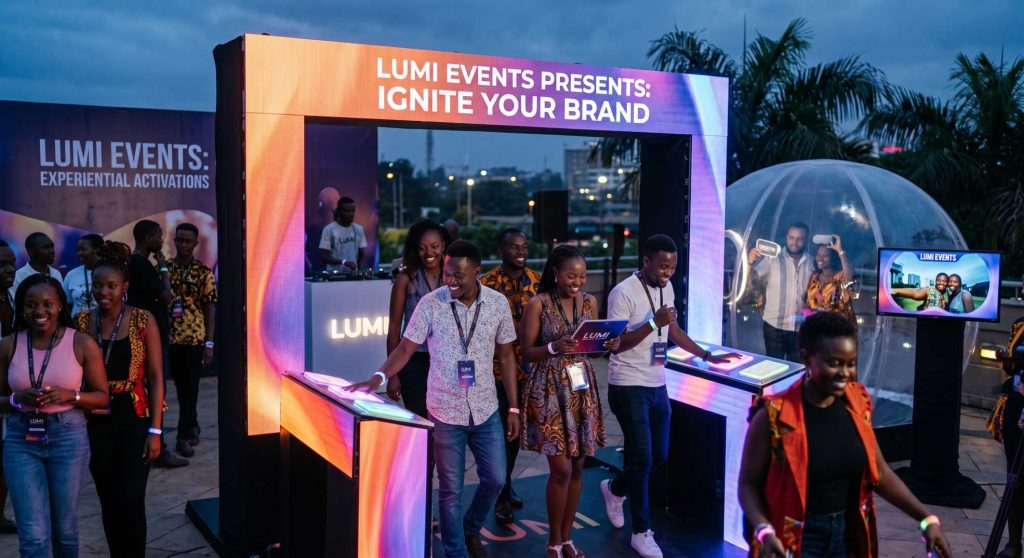
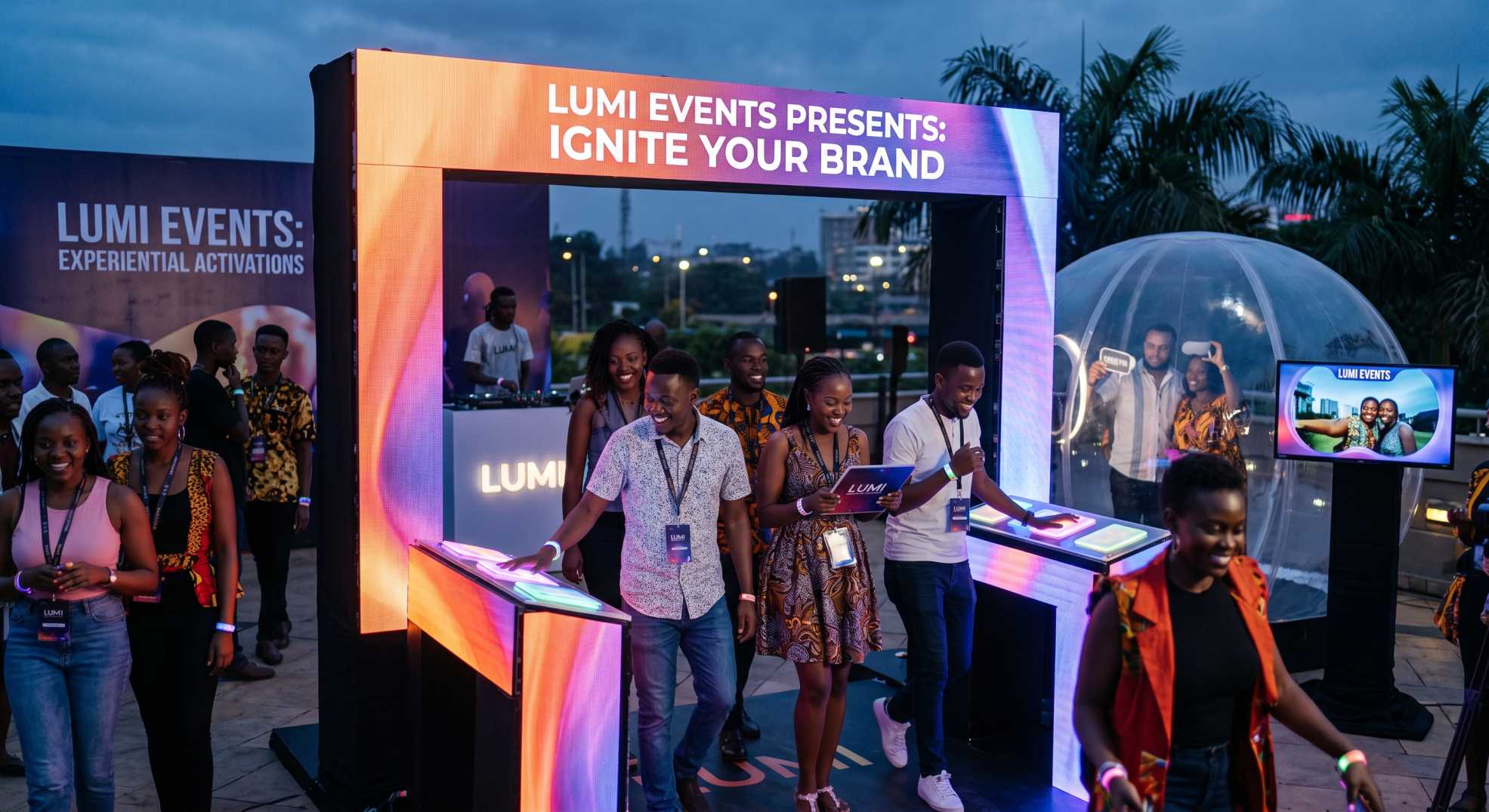
Experiential Brand Activations can capture a brand’s audience on a much deeper level than the attention-focused work of digital marketing. While trust in advertising from traditional sources is at an all-time low, consumers crave authentic brand experiences and as such can become an invaluable marketing tool. Investing in experiential brand activation is now non-negotiable in modern marketing strategies.
It Can’t Scroll Past It You can’t scroll past a physical experience. When a Experiential Brand Activations is physical, it gets attention by stepping out of your screen and into the real world to be a tactile experience that disrupts the way people scroll through digital to experience everything a brand has to offer without the distraction of 5 other open browser tabs.
Create Meaningful Connections The most important aspect of Experiential Marketing is to create meaningful experiences for consumers that help them develop positive associations with a brand and a product or service. By engaging multiple senses, activation experiences are embedded deeply into consumers’ memories creating great brand affinity and driving long-term sales. The science is simple but effective: people remember and enjoy great experiences.
Massive Earned Media and UGC Activation provide a successful foundation for an Earned Media and UGC campaign. We design activation experiences that are natural to share in social media channels. By creating Instagrammable and/or TikTok worthy moments we empower attendees to become a mass of micro-influencers, generating millions of impressions and massive amounts of Earned Media & UGC for a brand.
Collecting High-Quality First-Party Data The third-party cookie is crumbling – and it’s time to start collecting first-party data from your customers. Experiential marketing is a great way to collect high-quality data from customers who are willing to part with it in return for a great experience. Whether it’s collecting RSVP data, incorporating gamification into an activation, or collecting data via post-experience surveys, customers are more willing to hand over their data when they receive a high-value experience in return.
4 Types of Highly Effective Experiential Brand Activations
There are many different forms of brand activation – some are more effective – but none is more versatile than the other. The choice of format will greatly depend on the brand itself, and the preferences of the target audience. Below, we have listed 4 of the most successful and inspirational examples of brand activations.
1. Pop-Up Shops and Immersive Retail
These events transform mere transactions into unique experiences that users want to share with others. A Pop-Up Shop by Glossier recently took place in several cities, and was equipped with local settings in completely different retail store formats. It felt like entering the Glossier world of Instagram.
2. Interactive Art Installations & Exhibits
These are of high aesthetic value and engaging to sensory experiences. Shareability is usually the aim of these and Refinery29’s 29Rooms is a great example of a highly fun interactive installation that combines art, exhibit and brand activism. Visitors go through a number of customized and surprise interactions within 29 highly stylized and themed rooms and take lots of photos in order to share them with friends and on social media as well as generating a high amount of user-generated content (UGC). Media coverage was also of a high level.
3. Guerrilla Marketing & PR Stunts
This type of brand activation is often created to generate huge amounts of shock and amazement and subsequently earned media attention, by executing a huge surprise in public spaces. To generate a huge amount of buzz by stopping people in their tracks while they are on the move, Guerrilla Marketing can be set up in a matter of hours, in contrast to a pop-up activation that needs days to set up.
4. Phygital and AR/AR/VR Experiences
which are ‘Phygital’ in nature (physical and digital combined) allow customers to experience brand activism in physical locations whilst also allowing them to access the activation online at a later time. As more powerful AR and VR experiences are developed, there are also increasing examples of their use within brand activism. To celebrate the launch of the Air Max 270, Nike released an AR activation in Los Angeles that utilized the brand’s app. Using the app, customers were able to scan in around specific retailers to unlock a digital version of the shoe to purchase, as well as a range of limited edition physical versions.
How to Execute a Flawless Experiential Brand Activation (Step-by-Step)
Ideas can turn into failures if they are not well executed. An event is something that has to be planned well and requires a lot of analysis in order to correctly target your audience and organize things accordingly. In this post we will explain how to organize a successful event step by step.
Step 1: Define Clear, Measurable Objectives (KPIs) Even before the design and build-out of an event can begin, it’s vital to establish specific KPIs to ensure that an activation reaches its full potential.
In this article authored by our creative director Dan Silverman and Event Branding & Activation Manager, Molly Kusmec for EventMarketer, “4 Proven KPIs for Measuring the Success of a B2B Activation,” listed four event metrics that can directly contribute to increasing brand awareness and generating direct on-site sales (amongst other results) including high-quality B2B lead generation and millions of social media impressions with only a 20% increase in brand awareness.
Step 2: Define Audience Requirements for Immersive Events An important consideration when planning an event for groups is that something must be offered to every individual. Thus as much information as possible must be collated with regards to the demographics of attendees for an effective immersive event experience.
When mapping out an experience for an event it is key, when pulling together all of the information regarding attendees, such as their desires, pain points and preferred communication platforms to ensure that the experience is relevant and maximizes return.
For example, for Gen Z driven activations utilizing AR (augmented reality) or experiences that are ‘TikTokable’ will garner much engagement. In contrast, B2B tech events would benefit from providing attendees with intimate networking lounges in order to facilitate high-level thought leadership amongst attendees.
Step 3: Create the Core Concept of Your Event With an immersive event, there’s always one moment of ‘Wow’ – the thing that your guests haven’t seen before. This needs to be shared. Create an event experience that makes your guests have to take a photo to prove how great it was. Also, give people a reason to participate and give them a reason to tell their contacts about the experience they had at your event. Make sure the Core Concept of your event experience links back to your brand story.
Step 4: Select a relevant location to hold an activation and evaluate the venue to gauge whether or not there is going to be enough organic foot traffic for an activation to generate buzz and for permits and accessibility to be adequate for attendees. Also activation timing is crucial and typically an activation is planned in relation to a relevant event (i.e. Major Cultural Events, Industry Events and Expos, etc…), conference, holiday or seasonal period and huge crowds of interest individuals attend and interact with activation and campaign.
Step 5 Launch the Omnichannel Promotion Campaign. The marketing of the activation is as important as the actual activation itself. Launch social ads and the influencer partnership in the days leading up to the activation. Live stream from the activation and utilize event specific hashtags on all related social media channels. Re-target all attendees after the activation has concluded and distribute a high-quality highlight reel to the entire audience.
Step 6: Plan Out the Logistics, Staffing and Contingencies of Your Activation This is probably the least sexy part of experiential marketing, but just as important as all of the other elements that come together to make up your activation. The brand ambassadors you bring to your activation will be representing your brand and your corporate values so it is imperative that you fully train them. In addition to the above, it is vital to have a number of contingency plans in place, for example, to manage large crowds at an activation, to have a back up location in case of bad weather, and technology fail-safes for any technology that you use at the activation.
How to Measure the ROI of Experiential Marketing
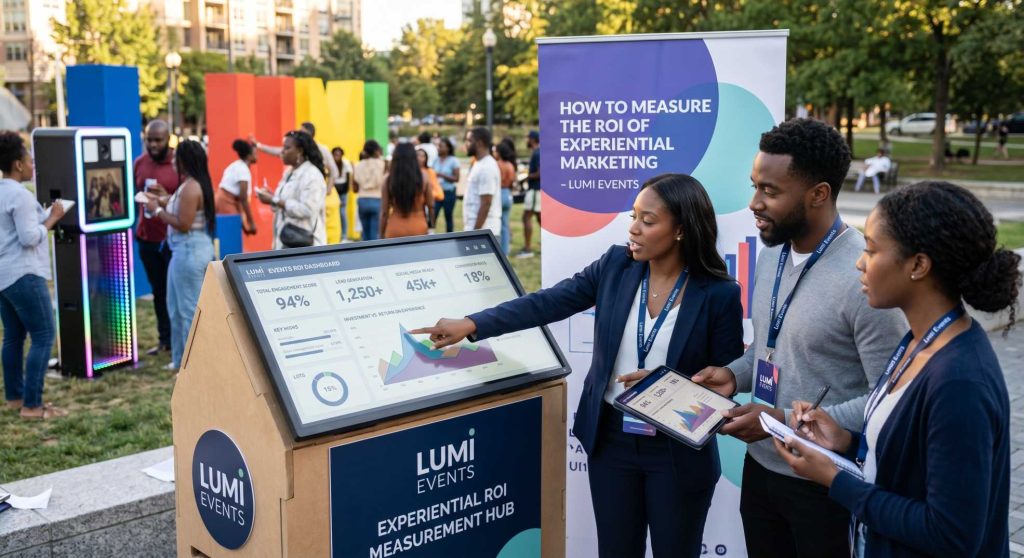
One of the biggest misconceptions about experiential marketing is that it’s just a form of brand advertising with no way to measure returns. In reality, successful experiential marketing has the potential to be highly measurable if executed properly.
To calculate the true ROI of your campaign, you need to track a number of different metrics throughout the three main stages of your activation.
Social Footprint / Reach The digital presence of an event (online) has to be tracked as well. Utilize event specific hashtags, local geofilters and social listening in order to scan for the amount of user generated content, brand-mentions and the corresponding online sentiment (senti-ment analysis) during and after the event.
For physical events, it’s also important to measure your Physical Engagement Metrics for On-Site Engagement. We track various metrics such as foot traffic, dwell time, and overall sentiment in order to gauge whether your activation concept is working to engage attendees.
We utilize foot traffic counters, heat maps, as well as RFID enabled wristbands that allow us to track each attendee’s attendance flow and duration of time spent in certain areas of the activation as well as provide us with insight into the most visited zones.Additionally, use concrete, physical figures to track engagement such as the number of samples distributed, or direct sales made directly from your activation.
Post-Activation Sales and Lead Nurturing – Measuring the long term value of an activation by tracking unique promo codes distributed at an event, tracking of QR codes that were scanned leading to targeted landing pages and the open rates and conversions of email sequences that were sent to leads after the activation.
Conclusion
High end brands need experiential activations more than ever to win loyalty in a world where everything is filtered through digital noise. Help transform your brand into an experience your community will be talking about by starting to brainstorm your next activation.