When trying to think about the parameters for designing the lights for 300 guests, it turns out that the issue is complicated because you have to take into consideration venue size, stage, dance floor, seating area, and the atmosphere to be achieved.
How many lights do you need for 300 guests in Nairobi?
The solution does not only depend on the number of attendees but also on some other factors.
In this guide, you will learn how to calculate the number of fixtures needed, how to break down your venue into event lighting zones, what kind of equipment to install there, and how to make an event lighting plan.
How Many Event Lights Do You Need for 300 Guests?
While computing equipment counts for 300 attendees, one should be careful about basing his/her numbers only on the attendance figures. The guest attendance gives an idea of the number involved, but does not tell you the size of the room or any other aspect of the visual requirements of the production.
The initial step involves dividing the area into various sections: the stage, the audience seating area, dance floor, entrance area, perimeter architectural features, and special tables.
Different events have very different requirements. In a corporate event, it is essential that the presenter be seen clearly and recorded effectively through the camera, while at an evening wedding, the emphasis is more on the perimeter ambiance and dancing.
7 Proven Factors That Determine Your Event Lighting Quantity
When it comes to calculating the number of event lighting fixtures for an event for 300 people in Nairobi, here are seven points that should help:
1. Size and Layout of the Venue
A banquet event with 300 guests can usually take about 450 to 600 square meters. A small ballroom will need fewer wash lights compared to an outdoor marquee tent hosting the same number of people.
2. Ceiling Height and Rigging Points
The height of the ceiling determines how far the fixture can reach and what kind of lenses are required. For low ceilings, wider lenses are needed, but in the case of high ceilings or an open tent, narrower beams and stands are recommended.
3. Nature of the Event
Different types of events, such as a conference, a wedding, a banquet, or a cocktail party have different needs. While a conference calls for crisp front stage washes, a wedding needs uplighting and effects for the dance floor.
4. Stage and Dance Floor Sizes
For larger stages and dance floors, specific fixtures are required to cover performers, backdrops, and dancers, respectively.
5. Required Atmosphere
Whether the desired atmosphere is an intimate warm white, colorful event lighting washes, or a party atmosphere is entirely what decides the quantity of fixtures needed and number of controllers.
6. Existing Venue Lighting
A venue that features dimmable chandeliers and architectural down lights means that less lighting will be required for a wash lighting system as it is best to concentrate on stage lighting, pin spots, and dance lighting fixtures.
7. Photography/Video Needs
There are some requirements for the cameras which need constant high CRI light (3200K–4000K). Ineffective stage lighting leaves the videographer no other choice but to use the lighting on the camera.
Recommended Fixture Counts by Event Zone
Separating the plan into designated functional areas helps in calculating equipment:
Stage & Presentation Area (4-6 Fixtures)
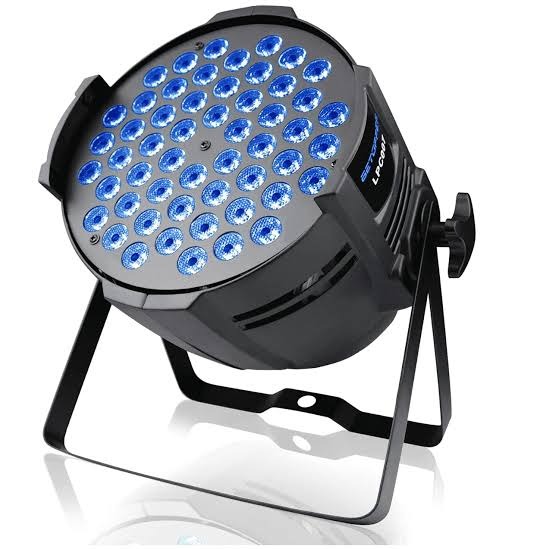
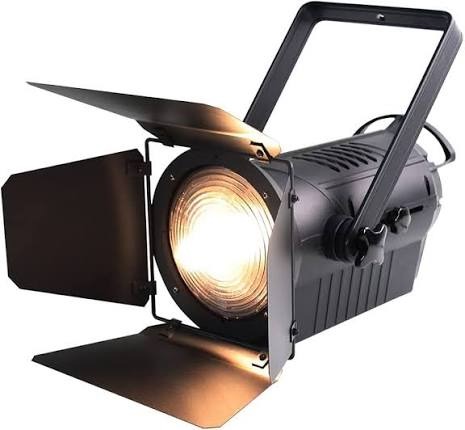
4 warm white LED Fresnels or profile spots (100W-150W) can be used as front wash fixtures in order to remove facial shadows from speakers/couple, along with 2-4 LED PARs as back/rim lights.
Guest Seating & Perimeter (16-24 Fixtures)
Wireless battery LED uplights can be arranged at every 2.5-3 meter distance along the walls/perimeter tent poles in order to wash the walls and delineate the space without glaring into guest’s eyes.
Dance Floor (4-8 Fixtures)
For the evening party, 4-6 moving head spots/beams should be installed on 2-meter upright truss totems, and a water based hazer will help in making the beams visible.
Entrance, Backdrop & Feature Displays (4-6 Fixtures)
Battery pin-spots or mini uplights can be used to isolate the cake table, registration counter, media photo wall, and floral arrangements.
3 Practical Event Lighting Packages for a 300-Guest Event
Instead of going with scattered fixtures, it would be better to arrange fixtures in layers as follows:
Package 1: Functional Package (Around 10-14 Fixtures)
This is more suitable for daytime events like seminars and workshops as well as luncheons.
4x Warm White Wash on T-Stands
6-8x Wall Up Lighters along the Perimeter
Basic Manual Dimmer/Fader Console
Package 2: Standard Package for Evening Functions (Around 24-32 Fixtures)
Useful for events such as night-time receptions, galas, and award functions.
4x Stage Key Lights + 6x LED Wash Bars behind the backdrop
16-20x Wireless Perimeter Up Lighters
4x Moving Heads Beams on Trusses over Dance Floor Area
1x Haze Machine and DMX Controller
Package 3: Production Package (36-48+ Fixtures)
Useful for product launches, concerts, and luxury weddings.
8x Stage Fixtures with cross-lighting
24x Smart-Pixel Perimeter Up Lighters for synchronized color chase
8x Moving Head Hybrids Fixtures on goal post trusses
Pin Spotting for All Center Pieces
High Output Hazers and Lighting Console Technician
How to Calculate Your Event Lighting Needs Before Hiring
Use the following three simple tips to complete your gear list:
1: Measure Your Venue
Take down measurements of the room length, room width, ceiling height, stage dimensions, and dance floor size. Identify the placement of wall sockets and main power distribution panels.
2: Draw Your Event Lighting Zones
Identify the stage, guest table placement, dance floor, bar area, and venue entrances on your floor plan to determine what areas your lights should cover.
3: Assign a Role to Every Light
Find out what function every fixture will perform: is it for visibility of the audience, illuminating the flat wall with colors, highlighting a sign, or creating movement in the air?
5 Common Event Lighting Mistakes to Avoid
Dependence on Only the Guest Number: The lighting requirements of a 300-guests party held in an open garden is way higher compared to the lighting needs of a 300-guests party in a small hall.
One Fixture Type for all Purposes: Stage washes, wall grazing lights, and dance floor lights have their separate functions; try not to use harsh dance floor lights to illuminate a stage, or vice versa.
Power and Generator Ignorance: Lighting gear that draws high power, hazers, and sound equipment can overload one circuit. Verify whether you need to get a backup generator there.
Venue Rigging Regulations Violation: Some venues have regulations against using ceiling clamps, which means you need to allocate money for independent truss bases or winch stands.
Not Testing the Setup Before the Event: Missing an evening test run makes it almost impossible to find flickering fixtures, incorrect DMX addresses, or camera lights.
What to Share with Your Rental Provider
Some of the logistical information needed when requesting an AV quote in Nairobi includes:
Name of venue, the hall selected, or the fact that the equipment is being used outdoors in a garden or tent setting
Measuring the floor area and ceilings accurately
The theme and mood of the event
Floor areas for stage and dance
Availability of power outlets (wall socket power or three phase industrial)
Special effects that you want (hazers, low fog, cold sparks, gobo monogram)
Final Thoughts
There is no such thing as a general fixture number of lights for all 300-person events in Nairobi. The optimal event lighting set up considers the square footage and height of the ceiling in the venue, as well as unique requirements of different zones. Splitting the floor plan into zones and assigning lights to those specific visual zones ensures proper illumination.